The week before a campus program goes live, product is sitting on pallets in a warehouse. A few dozen students, on as many campuses, are finishing their brand training. And someone on the brand team is asking whether the sorority event at the University of Florida ever got approved. If the agency is doing its job, the brand manager never has to ask that question. If it isn't, she spends the whole semester asking it.
That gap is most of what separates one college marketing agency from another, and it almost never shows up in a pitch deck. Every agency has a student network and a highlight reel. How to choose a college marketing agency comes down to what happens after the contract is signed: can they get the product into a student's hands, and can they show you what happened once the semester is over.
Start with what you need students to do
Before you get on a single call, get clear on what the program is actually for. For most of the food, beverage and beauty brands we talk to, it's trial: getting product into the hands of students who have never bought it, then finding out if they plan to. Others care more about awareness, or mostly want a pile of content made by real students.
That answer should pretty much decide which kind of agency you hire. A team built around event staffing can get your logo onto the quad, sure. But moving 50,000 cans of soda across two dozen campuses in a semester is a different beast. Somebody has to own shipping, campus approvals, and Ambassadors who know which club meetings are worth crashing. If you get the same plan back no matter what you said about your goals, you're probably being sold a package off the shelf.
Ask who recruits, manages, and pays the Ambassadors
Pretty much every agency will tell you they have a network of thousands of students. That's nice to hear, but it doesn't really tell you much. What you want to know is who is doing the work from week to week. Who vets each Ambassador before they represent your brand? Who signs their contract and cuts their check? When posts are late, who's following up, and when a student drops out in October (and someone always does), who finds the replacement?
Some of the options out there are marketplaces or software platforms, which give you access to students and then leave your team to run everything else. For a small pilot that can be fine. For a large CPG brand with a national program, though, the hours pile up fast, and so does the risk of a student saying something off-brand about your product in front of a room full of people.
With a full-service agency, all of that sits with them instead of you. At EvolveZ, every Ambassador goes through a social media audit, an availability check and an interview before we hire them. From there we contract and pay them as 1099 independent contractors, train them on the brand, and manage them every week of the semester. We wrote more about how that model works in our guide to choosing a college brand Ambassador agency for CPG. Take it from us, running an Ambassador program is valuable but hard. A few of our current brands came to us after a marketplace or DIY program stalled.
Look at where the samples actually go
Campus sampling often gets pictured as a folding table outside the student union, and that's part of it. A lot of the best moments we've seen happen in much smaller rooms: a sorority chapter meeting, a club fundraiser, a residence life movie night, a few friends doing a taste test in someone's dorm. When you're talking to an agency, ask where they'd actually put your product, and why those spots make sense for the students you're after.
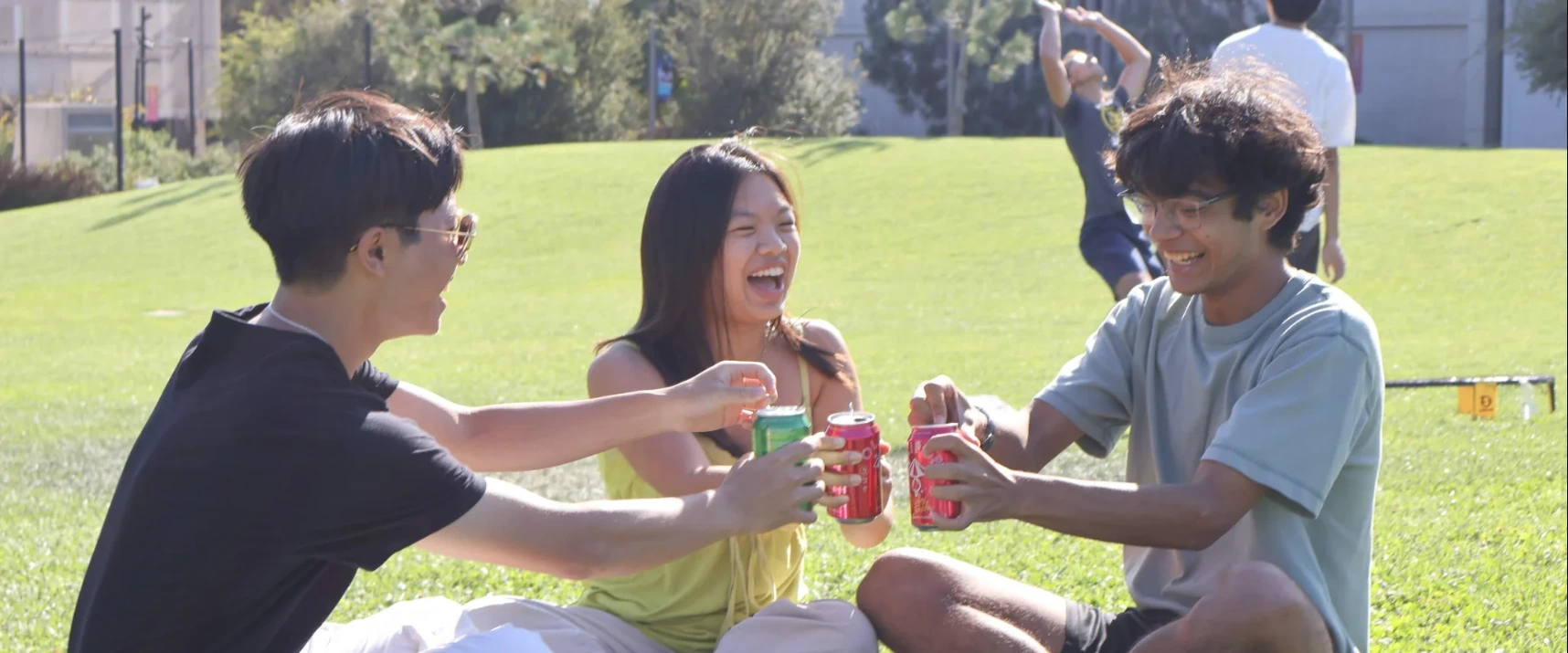
OLIPOP is a good example of this. On our OLIPOP program, 25 Ambassadors across 24 campuses handed out 50,160 full-size cans, mostly inside student clubs and residence life events. We also ran five roadshow stops where the OLIPOP team came out to join the Ambassadors. Every stop was a sampling moment and a content shoot at the same time.
Then there's getting product to campus in the first place, which is the unglamorous part. Ask how samples ship, who keeps track of inventory, and how the campuses get chosen against your retail footprint. For Doritos, product went out through our 3PL warehouse, which took a lot of pressure off the Frito-Lay sample fulfillment team. Honestly, if an agency hasn't thought much about shipping, it probably hasn't thought much about your program either. Our campus sampling services page and our post on what a campus sampling agency does go deeper on this.
Make the agency show you the measurement before you sign
Most recap decks we've seen are loaded with reach, impressions and engagement rates. Those look great on a slide, but they won't tell you whether a single student plans to buy your product. Ask to see a real end-of-program report before you sign anything, and ask how purchase intent gets captured right at the moment of trial.
On the OLIPOP program, survey results showed 85% of sampled students were new or infrequent OLIPOP drinkers (42% had never tried it at all), and 76.1% said they were "much more likely" to buy it after trying a free can. The program also hit a 22.7% post-sampling opt-in rate, which gave the brand an audience it could reach again later. That's the kind of thing you can actually share with your team, and the ROI that shows what you're doing is working.
Social performance should sit in that same report. We track Ambassador content through CreatorIQ and report every week, and our attribution and reporting page lays out what we measure. For the longer version on judging whether a program paid off, our post on college brand Ambassador program ROI covers it.
Check how content gets approved
Students are often better at making content about your product than a brand studio is, because it ends up looking like their real lives (a late-night study session, a gym bag, a tailgate before the game). That's also why approvals matter. A big CPG brand needs every post looked at before it goes live, with the paid-partnership disclosure the FTC expects from anyone paid to promote a product.
Ask how posts get reviewed, how fast they come back, and where the Ambassadors will be posting. Ours are on TikTok and Instagram, and nothing goes up until we've checked it against the brand's guidelines. Some of that content outlives the campaign: the Doritos Dinamita team reposted more than 30 pieces of Ambassador content on @Dinamita, the sub-brand's official TikTok account.
Ask which brands came back
A case study is helpful, but a brand that signs on for another semester tells you more. Ask every agency you talk to which clients have renewed, and how many times.
Our Doritos program with PepsiCo Frito-Lay kicked off in Spring 2024 with 100 Ambassadors promoting Doritos Dinamita, and it ran four semesters in a row with a new product each time. For the Golden Sriracha launch in Spring 2025, about 100 Ambassadors across 51 campuses handed out more than 44,000 samples.
One more thing to ask about is pricing, in a way you can actually compare. Agencies quote all sorts of ways, so ask for a cost per Ambassador per semester and what's included. Most of our programs with national campus coverage start at $2,450 per Ambassador per semester, and that's listed on our FAQ page.
A short checklist for your agency calls
- What's the main goal you'd build this program around, and how would you measure it?
- Who vets, contracts, pays and manages the Ambassadors week to week?
- Which campuses and which settings would you pick for our product, and why?
- How does product get to campus, and who's tracking inventory?
- Can we see a real end-of-program report?
- How is content reviewed and disclosed, and on which platforms?
- Which brands have renewed with you?
The highlight reel matters a lot less than who's still on top of the details in week nine. If you'd like to see how we'd answer these questions for your brand, submit a request and our CEO, Michael Spitalieri, will turn around a proposal for your program outlining capabilities, deliverables, and pricing.